Rachel Nicks

Room B23 · School of Mathematical Sciences, University of Nottingham · NG7 2RD · UK

+44 (0)115 951 4958 · rachel.nicks@nottingham.ac.uk

I am an Assistant Professor in the School of Mathematical Sciences at the University of Nottingham. I work in the interdisciplinary area of Mathematical Neuroscience, developing and applying techniques from nonlinear dynamics to understand patterns of behaviour observed in large scale brain activity. This includes bifurcations in coupled oscillator networks and pattern formation in neural field models both with and without axonal propagation delays. I have recently started to investigate the effects of white matter delay plasticity on network dynamics. See the Research section for more details.

I lead the Mathematics in Life Sciences (MiLS) network which brings together mathematicians working at the interface with life sciences, to discuss the mathematics underpinning the modelling and analysis of the life science applications. The network organises regular workshops providing a forum for discussion and collaboration. Join the mailing list

Leverhulme Trust logo

My current reearch project, White Matter Computation: Utilising Axonal Delays To Sculpt Network Attractors, is funded by The Leverhulme Trust under Research Project Grant RPG-2025-052
The project is featured in the Trust's 2025 Annual Review.


Research

My research interests lie at the interface of applied mathematics and neuroscience, with a particular focus on the application of techniques from nonlinear dynamics to understand patterns of behaviour observed in large scale brain networks and neural fields. This covers a broad range of topics including techniques for the analysis of dynamics in coupled oscillator networks such as phase-isostable reduction or the approximation by piecewise linear models, pattern formation and systems with axonal propagation delays which can be state-dependent due to adaptive activity dependent myelination.

Follow the links below for more details on recent research themes:

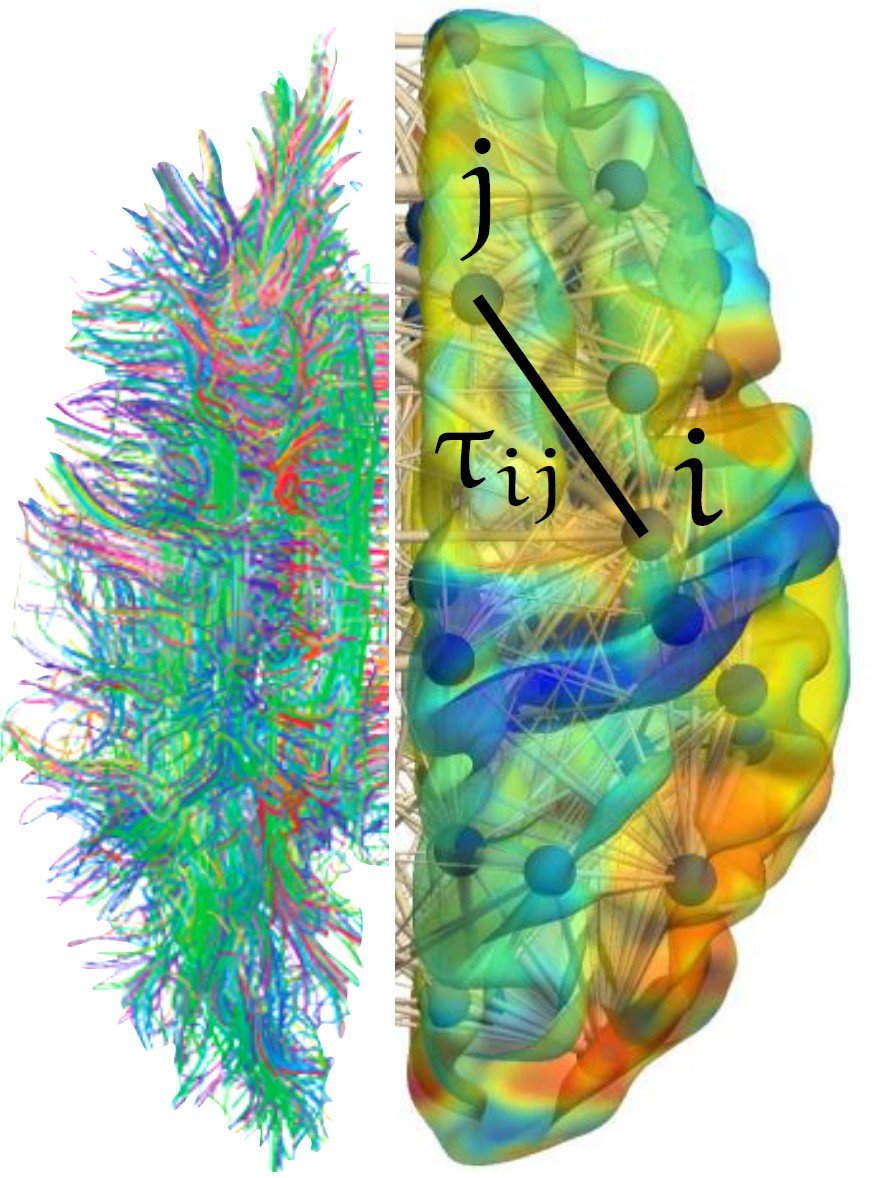
White Matter Computation

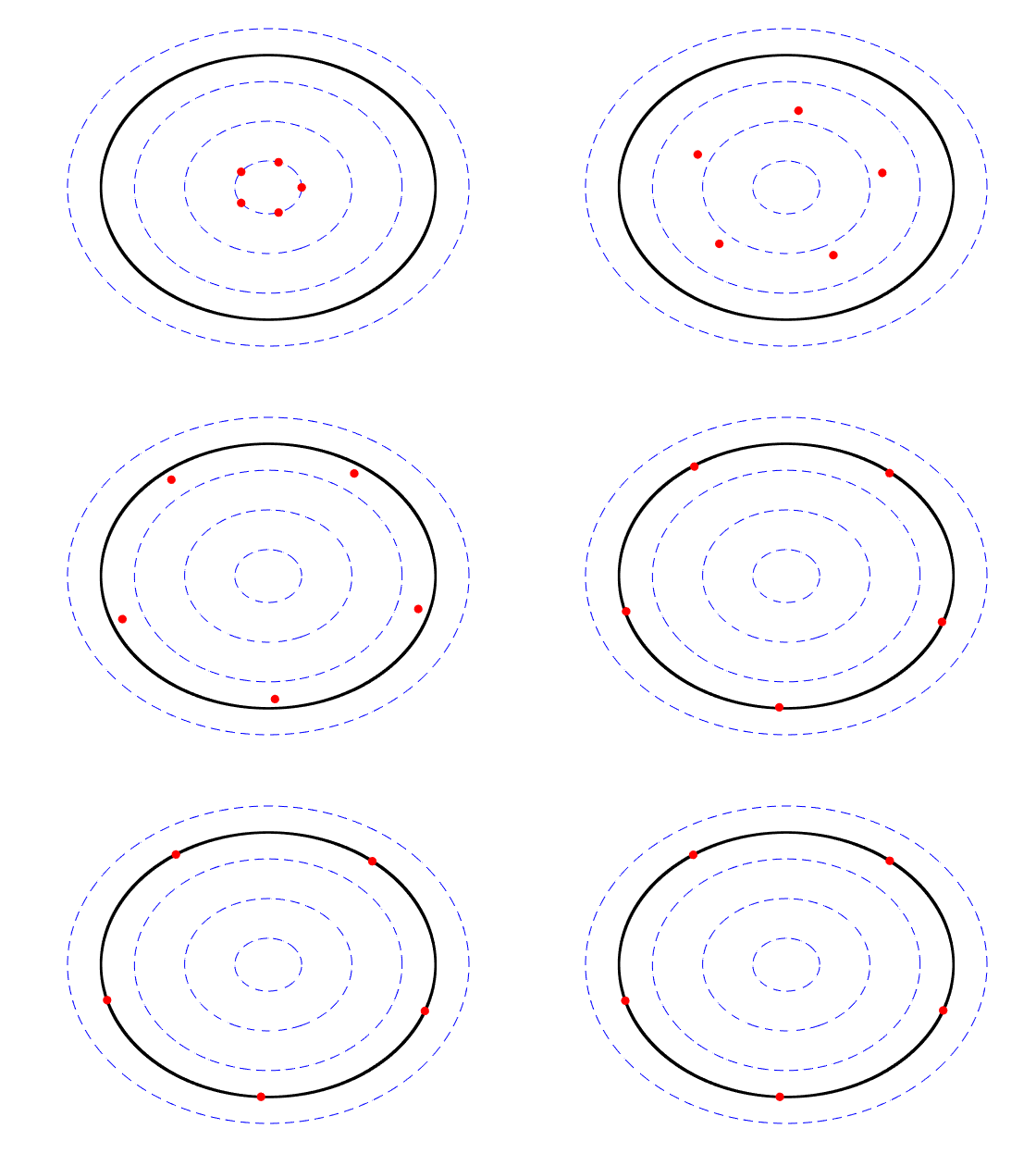
Phase-isostable descriptions of coupled oscillator networks


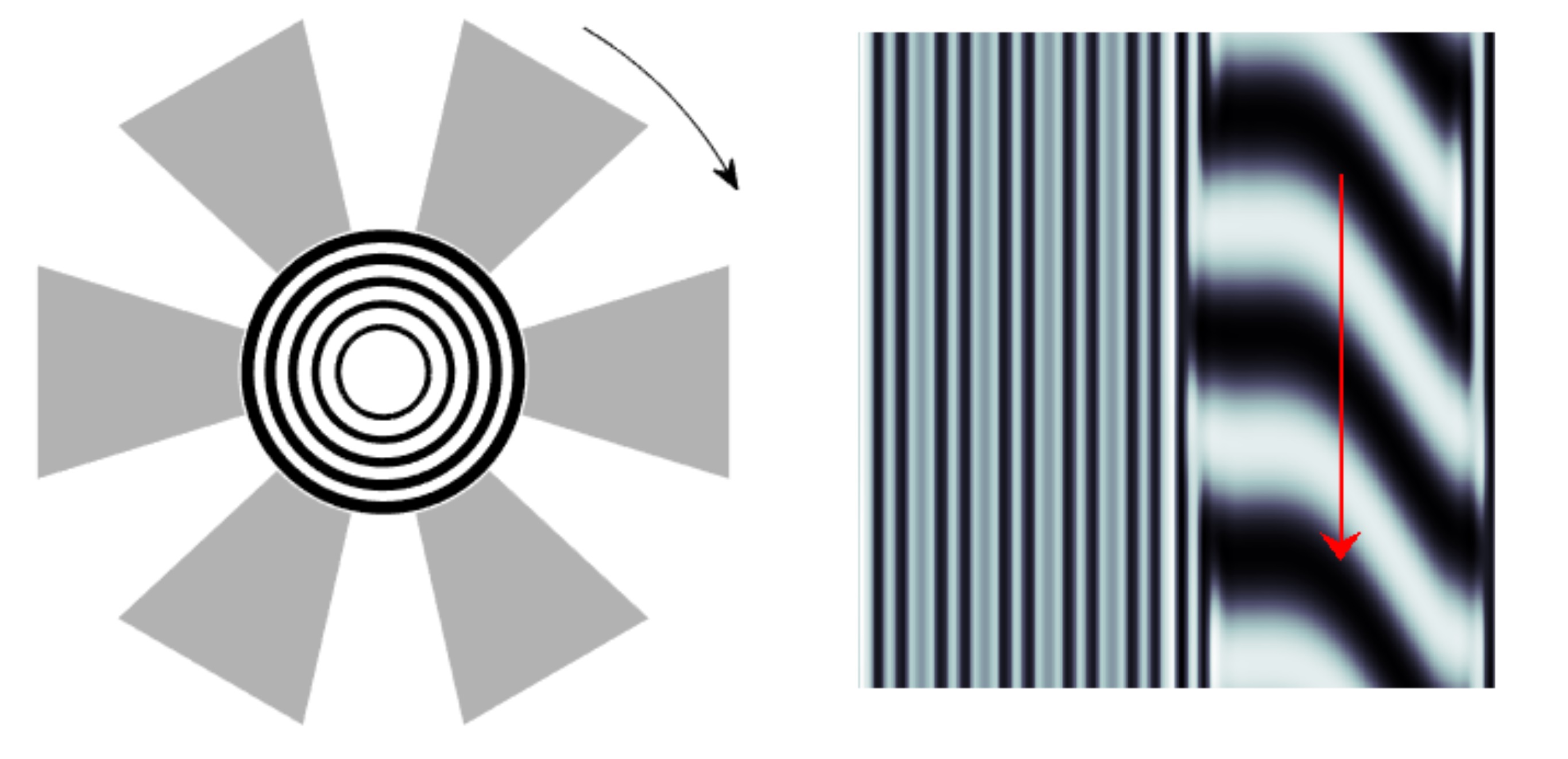
Sensory induced visual hallucinations

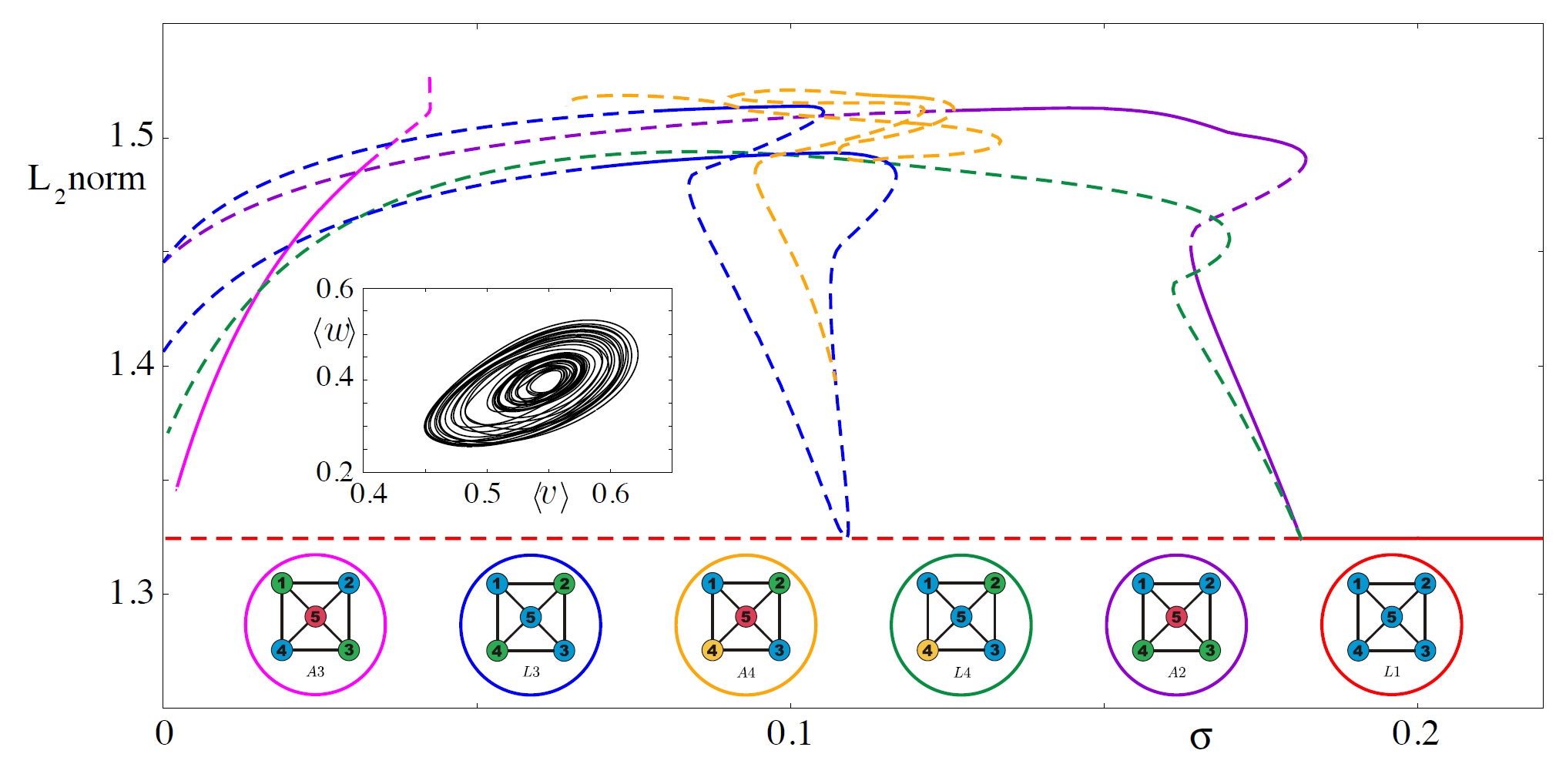
Networks of Piecewise Linear Oscillators


Grants

2025 - 2029 The Leverhulme Trust White Matter Computation: Utilising axonal delays to sculpt network attractors (with Stephen Coombes) £369,202

PhD Students


Mustafa Sayli : Nonsmooth dynamical systems: from nodes to networks PhD 2021
Abigail Cocks : The Dynamics of Neural Fields and Applications to Vision PhD 2022
James Ross : Mathematical Neuroscience: From Neural Fields to Neuroimaging PhD 2025
Reem Almarashi : Dynamics of mass in mass chains
PhD 2025
Hanzhen Shen (Selena) : General models for Transcription Factor Binding to DNA Promoters
PhD 2025
Robert Allen : Phase-isostable descriptions of coupled oscillator networks
PhD 2026
Grace Jolly : Neurodynamics with delays
Yr 2
Emanuil Hristov : Neurocomputation in networks with plastic delays
Yr 1
Rifah Tasnia : Mathematical Neuroscience in Mental Health
Starts Oct 2026


Post-Doctoral Researchers


Oliver Smith : Understanding of effects of external drive on power grid dynamics using phase-amplitude modelling 2022
Stefan Ruschel : White Matter Computation: Utilising Axonal Delays To Sculpt Network Attractors 2026 - 2029


Publications

R Nicks, R Allen, S Ruschel, E Hristov and S. Coombes 2026, Phase-isostable reduction of neural oscillator networks with delays, in prep
G Jolly, R Nicks, S Ruschel, G Iskenderoglu and S. Coombes 2026, Phase oscillator networks with multiple and state-dependent delays: A framework for exploring white matter plasticity in neurodynamics, in prep
S Coombes, R Thul, S Ruschel, and R Nicks 2026, Adaptive conduction delays and phase locking in spiking Haken Lighthouse networks, in prep
S Ruschel, E Hristov, H G E Meijer, S Coombes, and R Nicks 2026, Network attractors driven by time-delay plasticity, Submitted
R Nicks, R Allen and S Coombes 2024 , Phase and amplitude responses for delay equations using harmonic balance, Physical Review E, Vol 110, L012202
S Coombes, R D O'Dea and R Nicks 2024 Brain anatomy and dynamics: A commentary on “Does the brain behave like a (complex) network? I. Dynamics” by Papo and Buldú (2024), Physics of Life Reviews, Vol 49, 38-39
R Nicks, R Allen and S Coombes 2024 Insights into oscillator network dynamics using a phase-isostable framework, Chaos, Vol 34, 013141
S Coombes, M Sayli, R Thul, R Nicks, M A Porter and Y M Lai 2024 Oscillatory networks: Insights from piecewise-linear modelling, SIAM Review, Vol 66, 619-679
M Sayli, A C Skeldon, R Thul, R Nicks and S Coombes 2023 The two process model for sleep-wake regulation: A nonsmooth dynamics perspective, Physica D, Vol 44, 133595
Á Byrne, J Ross, R Nicks and S Coombes 2022 Mean-field models for EEG/MEG: from oscillations to waves, Brain Topography, Vol 35, 36-53
R Nicks, A Cocks, D Avitabile, A Johnston and S Coombes 2021 Understanding sensory induced hallucinations: From neural fields to amplitude equations, SIAM Journal on Applied Dynamical Systems, Vol 20(4), 1683-1714
J Ross, M Margetts, R Nicks, I Bojak, D Avitabile and S Coombes 2020 A brain-wave equation incorporating axo-dendritic connectivity, Physical Review E, Vol 101, 022411
R Nicks, L Chambon and S Coombes 2018 Clusters in nonsmooth oscillator networks, Physical Review E, Vol 97, 032213
S Visser, R Nicks, O Faugeras and S Coombes, 2017 Standing and travelling waves in a spherical brain model: the Nunez model revisited, Physica D, Vol 349, 27–45
P Ashwin, S Coombes and R Nicks 2016 Mathematical frameworks for oscillatory network dynamics in neuroscience, Journal of Mathematical Neuroscience, 6:2
R Nicks 2014 A classification of the symmetries of uniform discrete defective crystals, Journal of Elasticity, Vol 117, 189-211
R Nicks and G P Parry 2014 Group elastic symmetries common to continuum and discrete defective crystals, Journal of Elasticity, Vol 115, 131-156
R Nicks and G P Parry 2013 Geometrical issues in the continuum mechanics of defective solid crystals, Miskolc Mathematical Notes, Vol 14, 199-213
R Nicks and G P Parry 2012 On symmetries of crystals with defects related to a class of solvable groups (S2), Mathematical Methods in the Applied Sciences, Vol 35, 1741-1755
R Nicks and G P Parry 2012 On symmetries of crystals with defects related to a class of solvable groups (S1), Mathematics and Mechanics of Solids, Vol 17, 631-651
G P Parry and R Sigrist 2012 Reconciliation of local and global symmetries for a class of crystals with defects, Journal of Elasticity, Vol 107, 81-104
R Sigrist and P Matthews 2011 Symmetric spiral patterns on a sphere, SIAM Journal on Applied Dynamical Systems, Vol 10, 1177-1211
R Sigrist 2010 Hopf bifurcation with spherical symmetry, Nonlinearity, Vol 23, 3199-3225

Teaching

I currently teach the Spring section of MATH1103 Applied Mathematics which covers qualitative methods for ordinary differential equations.

In Autumn 2026 I will additionally be teaching the new module MATH3070 Dynamical Systems.

In the past I have taught MATH2012 Modelling with Differential Equations and various mathematics service modules for Engineers.


Curriculum Vitae

Employment

University of Nottingham

Assistant Professor
School of Mathematical Sciences
August 2016 - Present

University of Birmingham

Lecturer in Applied Mathematics
School of Mathematics
January 2013 - July 2016

University of Nottingham

Research Fellow
School of Mathematical Sciences

Research funded by EPSRC via the "Modelling continuous and discrete defective crystals" grant.

December 2009 - December 2012

Education

PhD Mathematics

University of Nottingham

Supervisors: Dr Paul Matthews and Dr Stephen Cox.

2010

MMath Mathematics

University of Warwick
2006